


The first time I was fortunate enough to be in the same room with the supernova known as Stephen Colbert was at a 2009 taping of The Colbert Report, I was living in the NYC area, right on the Hudson River on the Jersey side, just across from the Upper West Side. My brother Matt had come up from Washington, DC for a visit, and I knew he was a die-hard Colbert fan. I managed to score three audience tickets and invited my childhood-turned-NYC-based friend Terry to join us. It was a rare episode, one where the musical guest, TV on the Radio, was also the main and only guest. We didn’t get a one-on-one moment with Stephen, but when they reconfigured the studio for the band performance, they brought the audience out of their seats and we got prime real estate: standing directly behind Stephen when he introduced the band. I decided being that close in proximity basically meant we were now besties.
That’s really how you feel when you’re in the same room with him: like he’s a close friend you’ve known for years, like he’s talking just to you and yet also inclusive of everyone. And there is absolutely no question he was born to do exactly this. It’s effortless, truly a gift that can’t be taught, and one of the best parts is he not only seems genuinely delighted but grateful to be in your company. When, let’s be honest, we are the ones blessed to be in his.
In 2015, Colbert was handed what might be the most pressure-filled set of keys in late night television: the Late Show desk at the Ed Sullivan Theater. The same stage where The Beatles made their American television debut in 1964, and where David Letterman held court for twenty-two years before him. The cultural weight of that alone would have buckled most people. Colbert treated it like a homecoming. He brought the full force of his wit, his warmth, and his willingness to say the quiet part loud. Every. Single. Night. He built something that became essential viewing for millions of people trying to make sense of a world actively resisting sense-making.
And the Late Show was exactly where I was the second time I was in the same room as Stephen Colbert. Not as an audience member, but backstage this time, with Kwame Alexander — poet extraordinaire, New York Times bestselling author of 45+ books, and Emmy Award-winning producer — for Kwame’s first appearance on the show. At the time, I was serving as Kwame’s Chief Strategy Officer and Creative Producer, which was exactly how it sounds: a total blast and thrill. One of the many aspects I loved about my role was developing and managing relationships, including with publishing, entertainment, institutions, nonprofit organizations, and media. That included engaging with Colbert’s team at the Late Show leading up to the appearance, and what an absolute rockstar group, from start to finish. Also, I have been in a lot of green rooms at this point in my career, but this one was to die for.
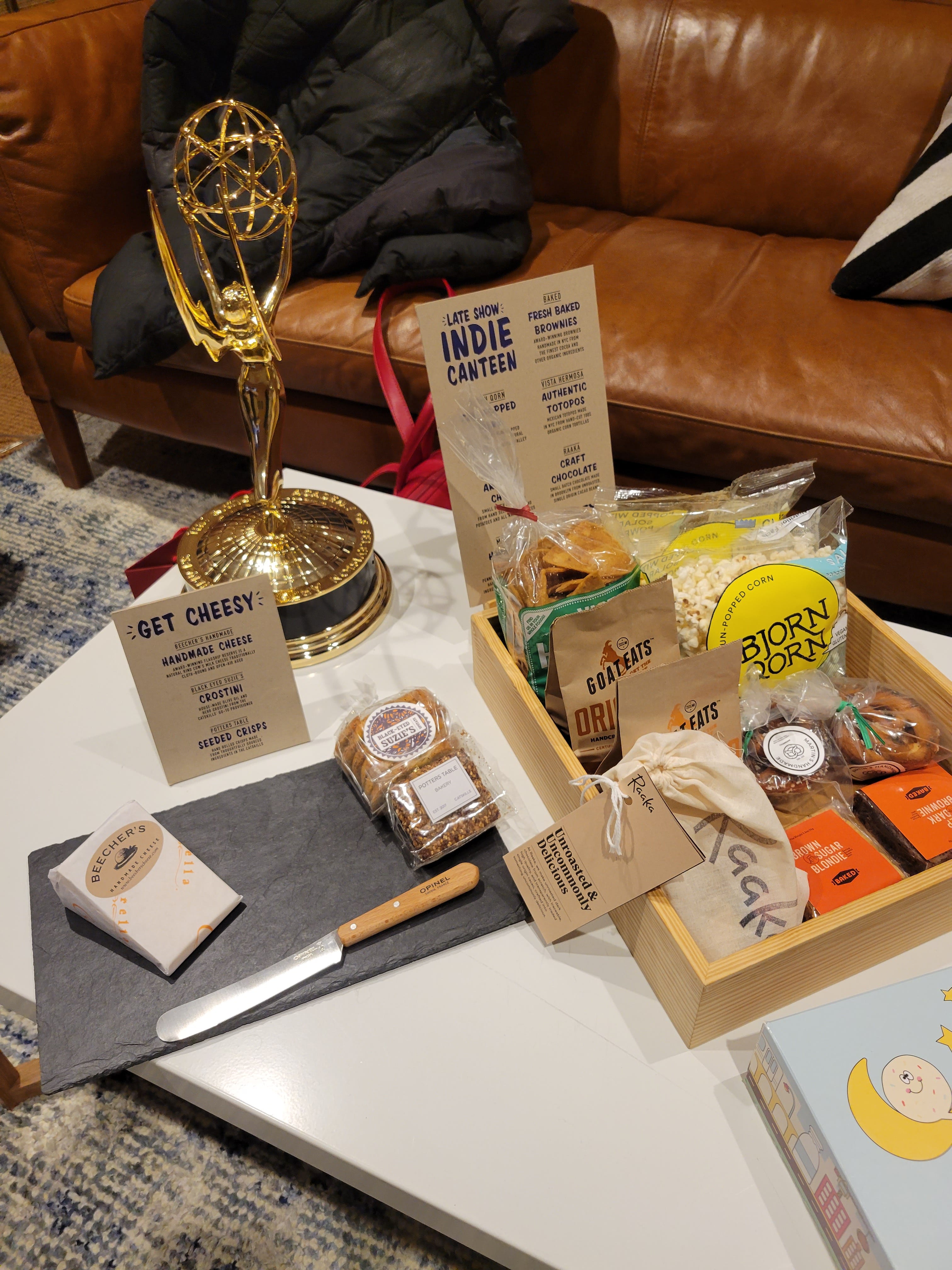
Of course, the best part was getting to meet Stephen one on one. And what I had experienced a taste of at The Colbert Report years before was now supersized: genuine and generous, warm and joyful, present in a way that feels almost radical in this particular moment of time. Stephen’s love of reading and for authors is also quite well documented, and he used to write poetry for his lovely wife Evie when they were first courting, so his connection with Kwame was something you simply cannot manufacture.

This tracks, because Colbert has always led with his whole heart. It’s his through-line with everything.
And then in July 2025, everything changed. And let’s be real crystal clear on the why behind that: because a corrupt narcissist sociopath threw a tantrum after Colbert called out CBS parent company Paramount for agreeing to a $16 million settlement with said corrupt narcissist sociopath, in response to one of his plethora of blackmailing lawsuits, this one over a 2024 60 Minutes interview with Vice President Kamala Harris. A lawsuit widely viewed by First Amendment experts as completely frivolous and without merit.
So why did Paramount settle for such a staggering amount? Because at the same time, they were also pursuing a merger with Skydance, owned by corrupt narcissist sociopath-aligned billionaire David Ellison, and they needed approval from the current administration’s Federal Communications Commission (FCC) for it to go through.
As Colbert said on his show on July 14, 2025: “I believe this kind of complicated financial settlement with a sitting government official has a technical name in legal circles: it’s ‘big, fat bribe.’”
Three days later, CBS decided not to renew the Late Show citing “financial reasons.”
The number one late night show for nine consecutive seasons. One of the most iconic shows in television history.
“Financial reasons.”
The merger was approved on July 25.
Welcome to a real life episode of Succession.
The outcry following the news was loud, widespread, and consistent, but it didn’t change the course of events. The Late Show aired its final episode last week, and if you haven’t watched it yet, stop what you’re doing right now and do so, because it was the definition of chef’s kiss.
I also love what Stephen said to People magazine after the last Late Show aired: “The ending of the show aside, which people can speculate about all they want, and I can’t argue with their speculations, but… we’re clowns. How much does it diminish the office of the presidency to even notice what we say?”
Indeed.
So yes, the show has ended. But if you think this is the end of the man known as Stephen Colbert, not a chance.
This is a man who learned resilience at a very, very young age, after the extremely tragic loss of his father and two brothers in a plane crash when Stephen was just ten years old. He has talked about it publicly, most memorably in two extraordinary conversations with Anderson Cooper: a CNN interview that first aired in August 2019 and then again in 2022 on Anderson’s All There Is podcast. Segments from both went viral because two people sat down and told the truth about grief, in a way that was luminous and almost unbearably beautiful. And again, if you haven’t given yourself the gift of watching these conversations, do so immediately.
Among the many things I can’t stop thinking about: Stephen talking about arriving at gratitude for his grief. About how suffering cracked him open in ways that let him see other people’s suffering, connect with it, love more deeply because of it.
This moment, specifically.
Anderson, who has had his own fair share of grief, said to Stephen, “You told an interviewer that you have learned, in your words, ‘Love the thing that I most wish had not happened.’” He choked up, but continued with, “You went on to say, ‘What punishments of God are not gifts.’ Do you really believe that?”
Stephen paused thoughtfully, and then said, sound and sure, “Yes.” After beat, he continued, saying, “It’s a gift to exist. And with existence comes suffering. There is no escaping that. I guess I’m either a Catholic or a Buddhist when I say those things. I’ve heard those from both traditions. But I did not learn it… that I was grateful for the thing I most wish hadn’t happened.. is that I realized it. And it is an oddly guilty feeling.”
Anderson offered “It doesn’t mean you’re happy about it.”
Stephen went on to say, “I don’t want it to have happened. I want it to not have happened. But if you are grateful for your life, which I think is a positive thing to do, not everybody is and I’m not always. But it is the most positive thing to do. Then you have to be grateful for all of it. You can’t pick and choose what you’re grateful for.”
Later, Stephen would clarify that “What punishments of God are not gifts?” was him quoting his favorite author, J. R. R. Tolkien (he might be the world’s biggest Lord of the Rings fan).
Regardless, this entire exchange will forever live rent free in my mind.
Stephen also said in his conversations with Anderson that he realized after his mother died in 2013 that he had been doing comedy for her all along. That underneath the desk and the monologue and the audience of millions, the secret was that he was trying to make her laugh. She had wanted to be an actress, but life had other plans, and she poured that passion for the stage into raising eleven children. Her youngest absorbed it and carried it and built something extraordinary out of it.
He made millions of people laugh instead.
Comedy as love letter. I mean, come on.
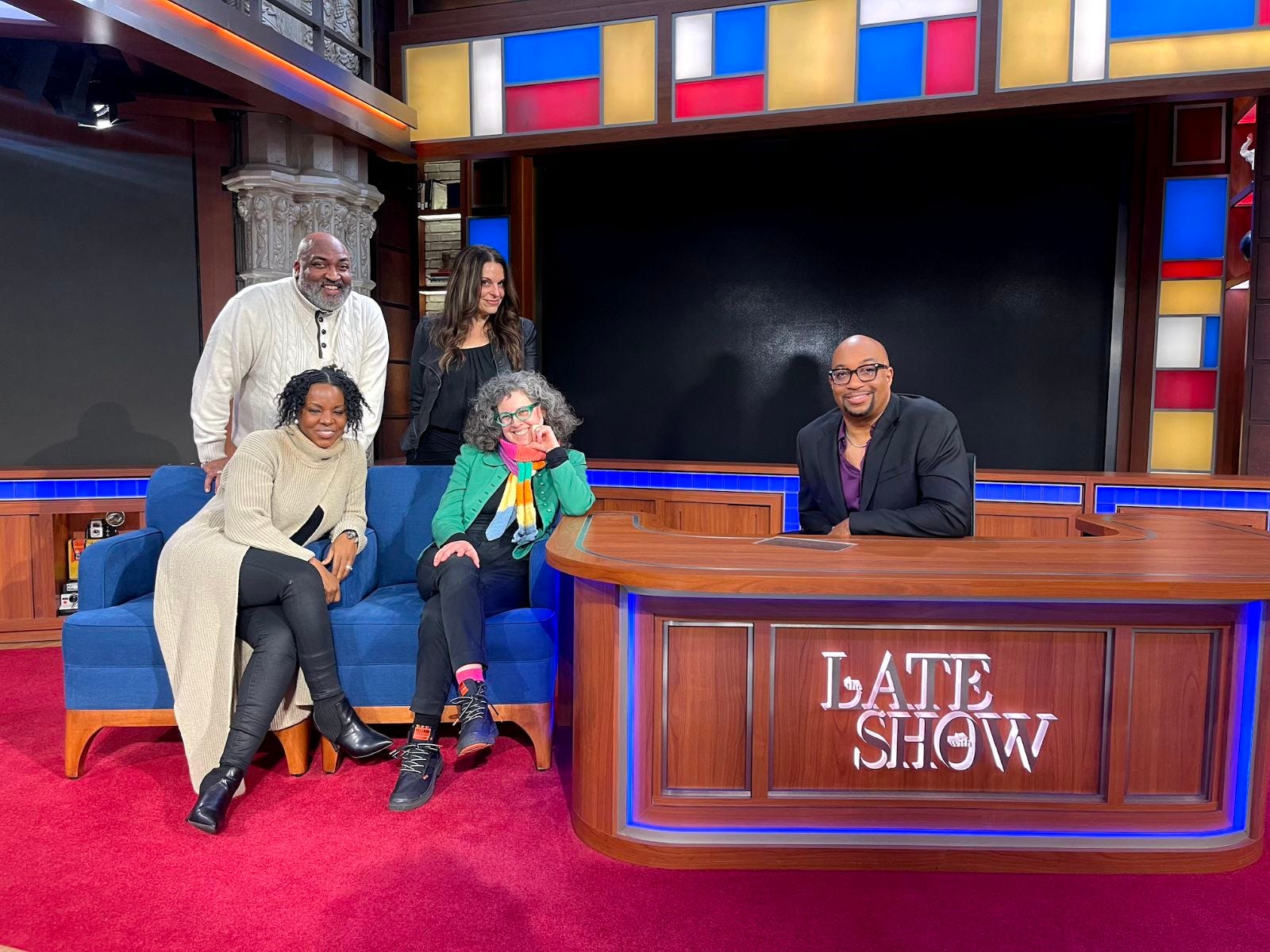
I have several photos from that day at the Late Show. Kwame and our crew behind Stephen’s desk after the taping…
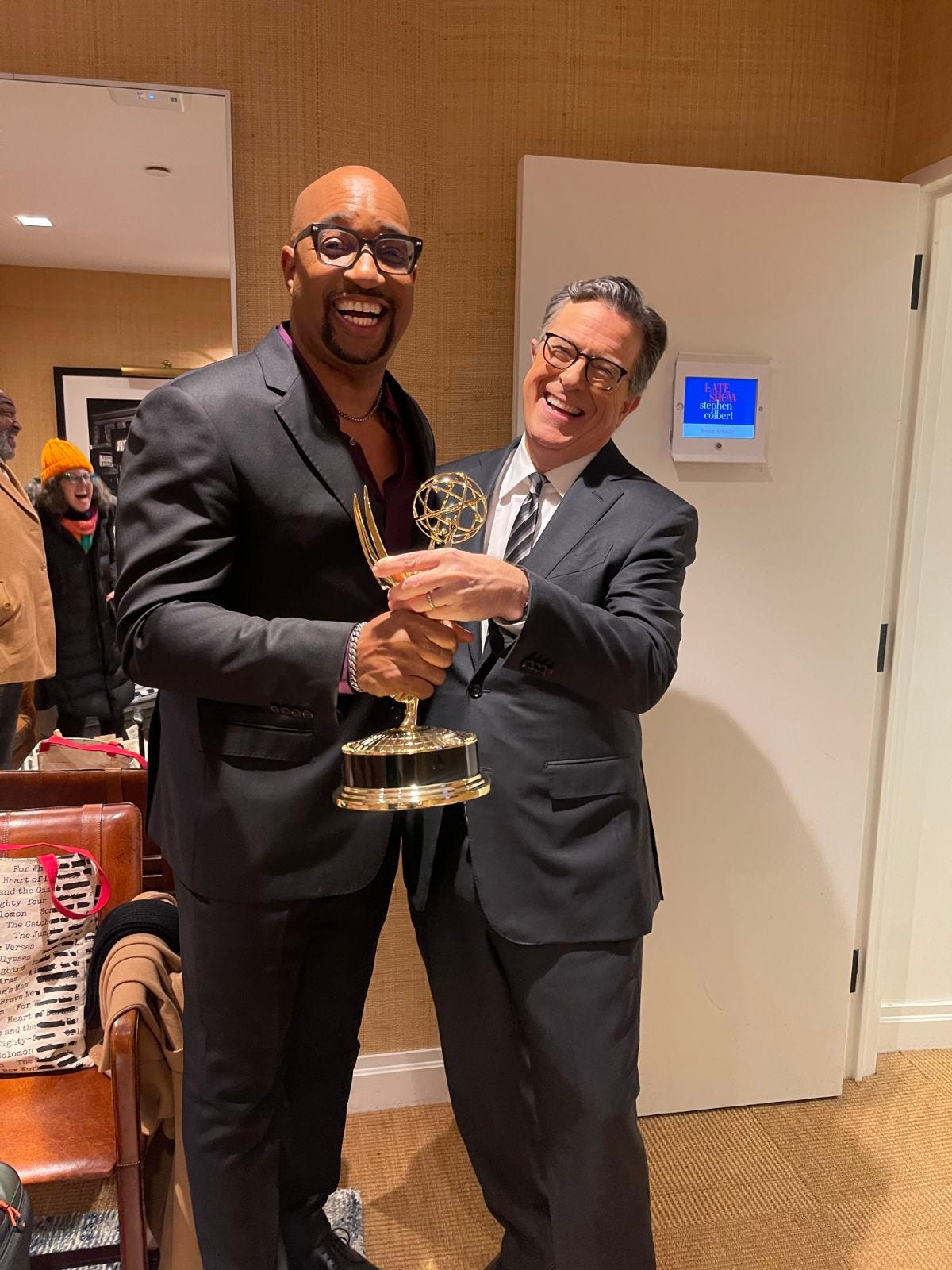
Stephen and Kwame in the green room, Kwame holding his Emmy, Stephen pointing like a proud father…
And my makeup room selfie, snapped in front of a lighted mirror and an iconic Late Show with Stephen Colbert director’s chair, daydreaming about when I would have my own appearance on the show talking about my scripted series.

I still believe that. The name on the director’s chair will be different, as this particular show is over, but Stephen Colbert is not. You cannot cancel the passion that drives a person to show up, five nights a week, and try to make sense of the world by finding what’s funny and true and worth holding onto in it. That doesn’t live in a time slot. It doesn’t require a desk or a band or a studio audience. It lives in the person.
You cannot cancel heart. And I have no doubt that what Stephen Colbert’s heart beats out next will once again lift the hearts of millions.
xo,
SG
Hopeless Semantic lands in your inbox on Wednesdays. If someone in your life belongs here, send them this way.
This is an absolutely wonderful post. Thank you for honoring him, sharing an insider memory, and also for reminding us of some very important larger life lessons. What an important piece of writing - I truly needed this today.
I couldn’t agree more the work with Anderson Cooper and
Stephen will always sit with me at a level that I don’t have the words to capture. Wonderful piece SG - appreciate you.